The Photo I Took

Design for the Shadow Box Installation
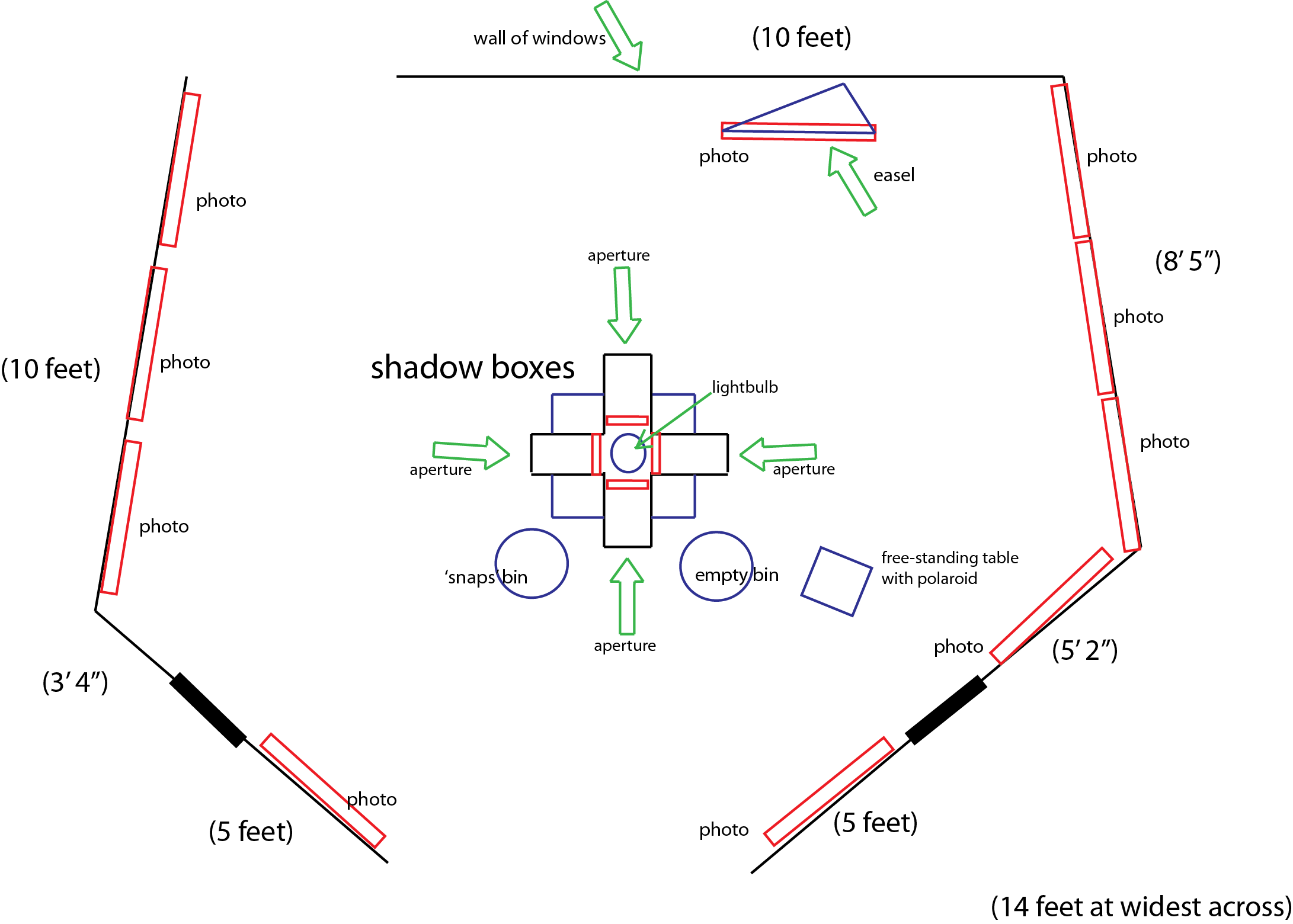
Space Design

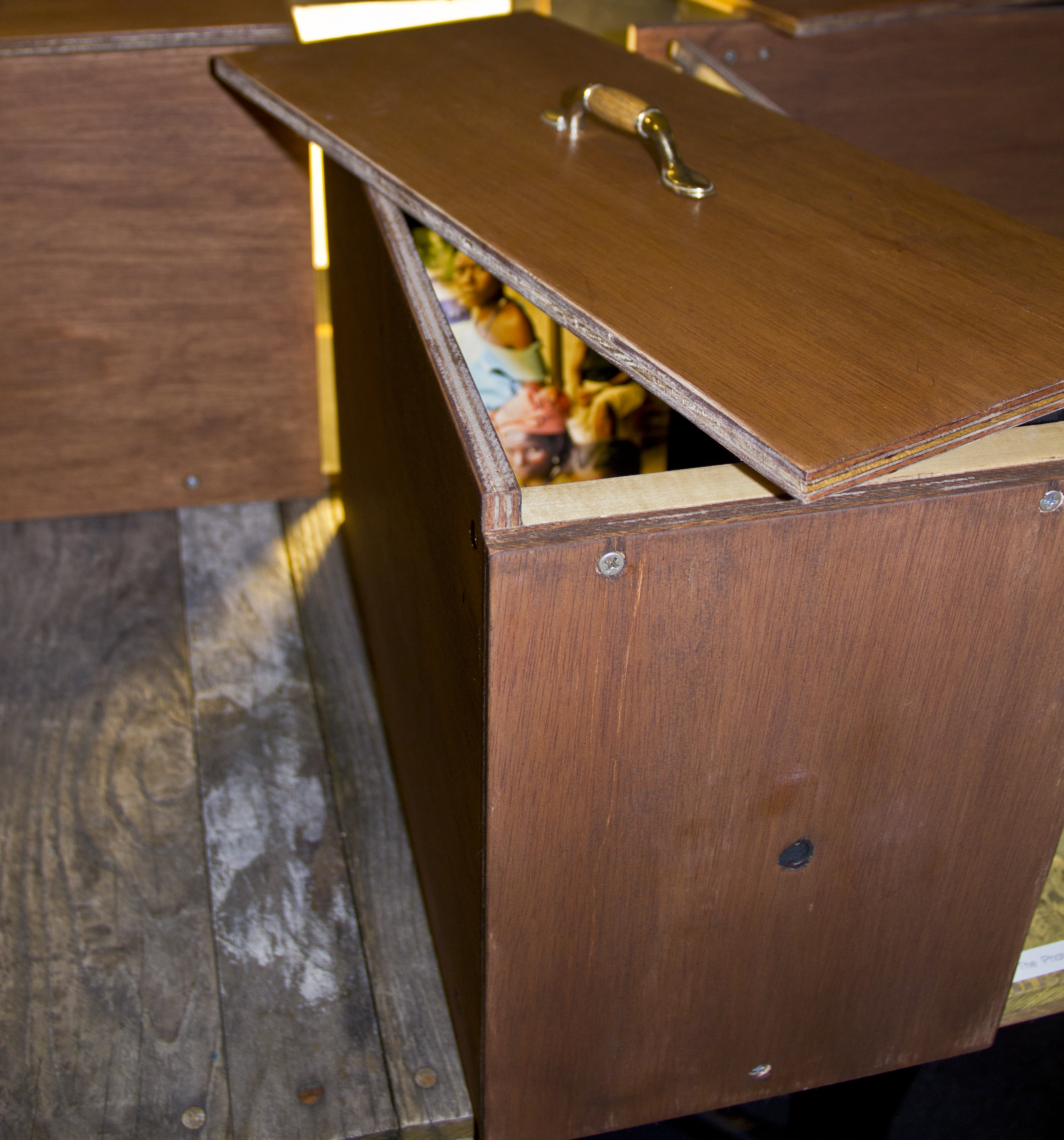
The Photo I Took: Installation

The Photo I Took #1
It is day two in Freetown and we are leaving the city for the north of the country. This is to be our only experience of Sierra Leone’s capital city, both coming and going—from the inside of a bus. All of us are flush with the glass, vying for window space to take it all in. We press cameras up against our faces, snapping pictures furiously. People outside notice the big bus full of white people. Some bring wares to sell, reaching up toward the tops of the open windows—small plastic bags of cold water perspire in the 90* heat; pineapple sears piled high on a platter balance perfectly on a woman’s head; red plastic buckets yield fresh-baked bread. Some only extend an outstretched hand, palm open, empty. Many imitate our gestures, lifting their hands to their eyes and clicking the buttons of invisible devices—‘more tourists with cameras for eyes.’ I hesitate to continue taking pictures, feeling implicated. I notice a woman walking straight across a wide boulevard, moving toward our bus. We are blocking the intersection, but she seems neither concerned nor surprised that her path is blocked. In fact, she seems to be the only person not noticing us. I raise my camera to my eyes and snap.
The Photo I Took #2
Yai Mary and her daughter Sarah sat on the front porch. I see them first and I wave, offering the customary bi chege. Sarah motions me over and as I approach I notice Desmond’s mother standing next to them—this is her home but I don’t know her name. She stands over Yai Mary and scrutinizes something in her lap. As I get closer, I realize the bundle in Mary’s arms is a baby—a week old at the most from the looks of it. Sarah, Mary’s youngest, is learning English and had helped me with translation in a few interviews. I ask her in Krio, ‘udat pekin?’—I thought I had met all the newborns in the village. She shakes her head. She exchanges words in Landogo with Mary. Desmond’s mother overshadows the conversation, tersely, not engaging with me. ‘ii no get mami, ii no get milk’. She motions to her breast. I am stunned and horrified-he will die without breastmilk. I am also in awe of Mary and Sarah, caring for this child, knowing he will not survive. I am ashamed because I need to take this picture, without knowing why.
The Photo I Took #3
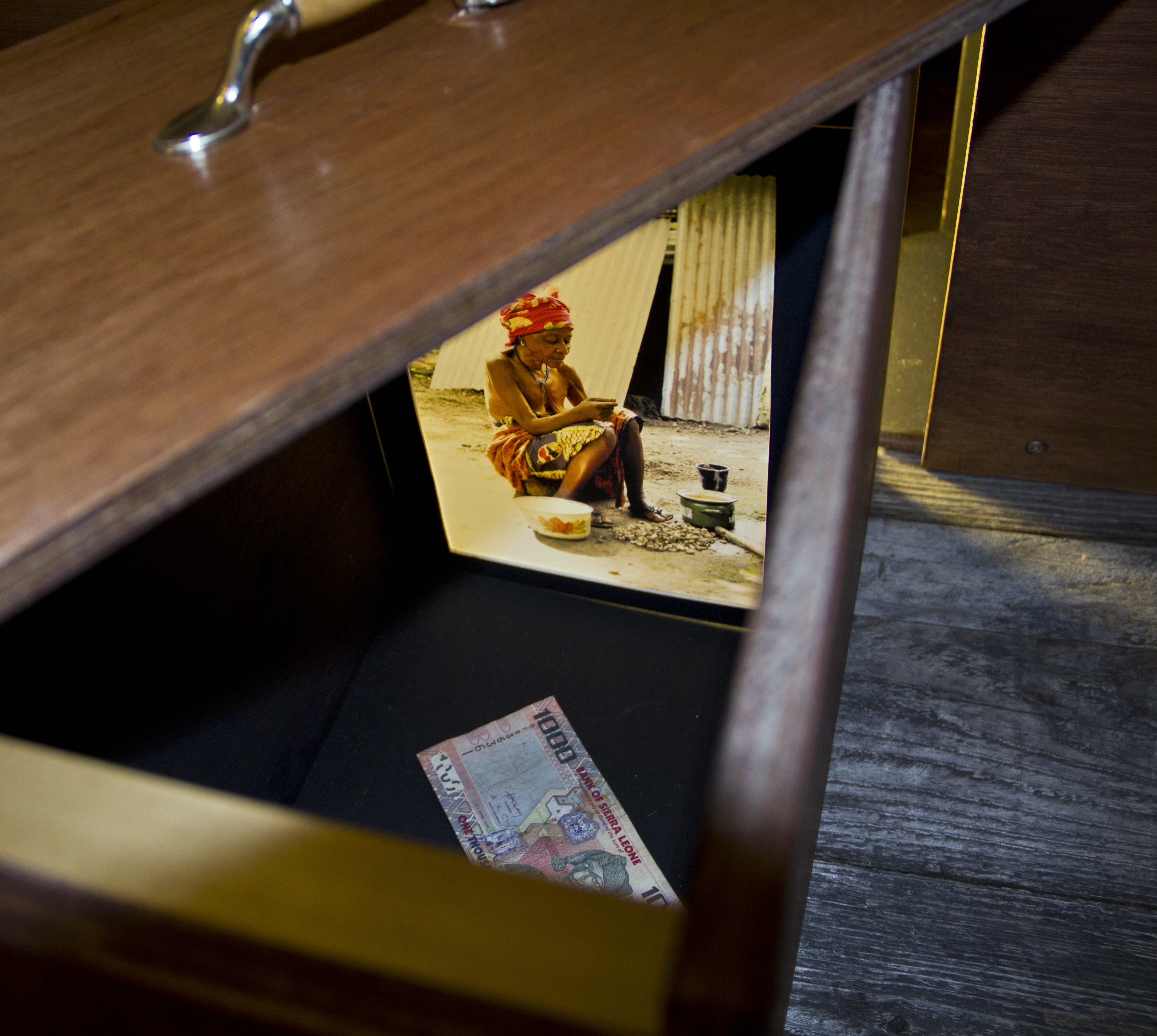
Today we are visiting Pa Sori. He lives on the outskirts of the village, accused of witchcraft, ostracized for his blindness. He greets us on his porch, clasps each of our hands in turn and exchanging bi cheges all around. Then, he takes us around the house. A woman there is going to show us how the thick syrupy orange oil used in all Salone cooking is made. She brings us around a big steaming pot of glistening palm oil. While she demonstrates, I look behind us. I see a woman sitting alone, shelling granat. I wander over toward her, curious. She looks up and I greet her. She offers me a few shelled nuts. I experience again the mix of emotions at accepting such an offering. I can’t refuse such gifts of food without being rude. I take them in my hand, ‘tenki ya.’ I gesture toward my camera. She raises her hand in a gesture of refusal. Immediately, I reach into my pocket, producing a thousand leone note—about 25 cents US. I gesture for her to take it. She takes it in her hand. She looks down. I step back and take the photo.

The Photo I Took #4
We are going to visit a village called Makeni. We walk a number of miles to get there, and as the path opens up into the dirt road of the village, pekin greet us first, running toward our party and grabbing every available hand to hold as we walk in. We assemble in the square where the elders come out to greet us, arranging a ring of plastic chairs and breaking out the ceremonial poyo. The men sit with us while the women and children crowd around us in a circle. I offer my chair to a woman standing behind me and stand as the ritual exchange of words and palm wine begins. A girl climbs up onto the woman’s lap, a daughter or a relative, or just clambering for a better view. I lift my camera to my eyes. The woman turns and looks at me then as I take the photo. I am vaguely reminded of Dorothea Lange’s photo of the migrant mother with her children, and wonder if I was infusing such content into this frame. I snap out of my reverie when she starts speaking to me, forcefully, and shaking her finger. MC tells me she doesn’t want to be photographed. She vacates the chair I’d offered and left. Feeling defeated, I sit down again.
In Situ: Snaps